Definitions
Normal sleep pattern
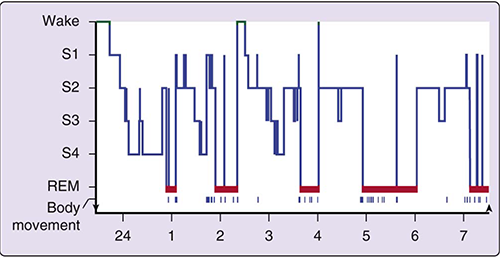
A normal sleep pattern is defined by a certain quantity which we are mostly aware and in control of (7-8 hours in adults) and equally important, by quality.
Sleep quality is something that most people are less aware of. During sleep, the brain activity changes and passes through various stages in cycles.
Stages S1 to S4 stand for superficial to deep sleep, while in REM sleep (Rapid Eye Movement) the brain is active, dreaming, and the body completely relaxed.
The length and sequence of sleep stages determines the quality of sleep.
Normal sleep histogram in a young adult.
Obstructive Sleep Apnea (OSA)
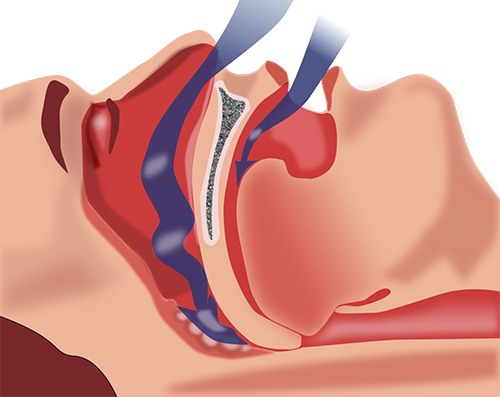
Obstructive Sleep Apnea (OSA) is a medical condition characterized by repetitive episodes of upper airways obstruction that occur during sleep. It is usually associated with a reduction in the blood oxygen levels. This, in turn, causes sleep fragmentation since arousing or waking up to breathe takes priority over sleep.
Diagram showing the mechanism of Obstructive Sleep Apnea.
Apnea (pause in breathing)
Apnea (pause in breathing) is defined by a cessation of airflow for 10 seconds or greater.
Types of sleep apnea:
- Obstructive, when is caused by an upper airways obstruction. This is by far the most common type of sleep apnea. As we dive into deeper levels of sleep we lose muscle tone and structural support around the airways, causing a gradual collapse and obstruction
- Central, when there is a disruption of the breathing drive (that is, the respiratory centres in your brain stem don’t send messages to your breathing muscles)
- Mixed, which is a combination of Obstructive and Central
Hypopnea (shallow breathing)
Hypopnea (shallow breathing) is a reduction of the airflow by 30% for 10 seconds or longer and with at least 4% oxygen desaturation.
Apnea/Hypopnea Index (AHI)
Apnea/Hypopnea Index (AHI) is the number of apneas and hypopneas per hour of sleep. AHI is a common objective measurement used in determining the severity of the condition.
The incidence of apnea episodes is highest during the REM sleep as the body is totally relaxed, with no muscle tone or structural airway support.
Continuous Positive Airway Pressure (CPAP)
This form of treatment uses a machine that delivers air pressure to achieve a pneumatic splint and maintain your airways open.